
 The Amphitheater: Bryce Canyon National Park features geological formations known as ‘hoodoos’. The heart of the park is the huge amphitheater, which features thousands of colorful hoodoos. The park features a 19-mile scenic drive that leads visitors to 13 viewpoints along the way. Photo by Gary Warren/ladailypost.com
 Hikers: Hikers make their way up through the hoodoos to the rim trail at the upper rim of the amphitheater. The depth of the amphitheater can be over 600 feet from the rim, depending on which trail the hiker is on. Photo by Gary Warren/ladailypost.com
By GARY WARREN
Photographer
Formerly of Los Alamos
We did not have a lot of spare time on our return trip home on our last venture but we did have time for a couple of days in southern Utah. After leaving Zion National Park we drove east to Mt. Carmel Junction where we turned north on U.S. Hwy. 89. We drove Hwy. 89 until it intersects with Utah Hwy. 12. The road into Bryce Canyon National Park is just a few miles away but we chose to stop and spend time in Red Canyon.
Red Canyon is a popular scenic and recreational area but there is no town. Red Canyon is within Dixie National Forest and there is a visitors center operated by the agency on Hwy.12 as well as a Forest Service Campground in the area. We enjoyed our visit and it was nearing sunset so we stayed in the Red Canyon Campground.
Bryce Canyon is a very unique park. The park was named after Mormon pioneer Ebenezer Bryce who settled in the area in 1875. Legend is that Bryce raised cattle that would often wander into the maze of hoodoos and get lost. The area was referred to as Bryce’s canyon, which led to the more formal name of Bryce Canyon.
The park was established in 1923 to preserve the beauty and scientific importance of the unique geological formations. The park was initially a national monument but later changed to a national park. The amphitheater of the remote park sits at about 8,000 feet in elevation to the highest lookout in the park at 9,100 feet. Due to the high elevation, Bryce Canyon is much cooler than the other four national parks in Utah.
The unique rock formations in Bryce Canyon are said to be at least 65 million years old. The hoodoos can range in size from under ten feet to over 200 feet in height.
The following morning we awoke early at Red Canyon with plans to visit Bryce National Park at sunrise. We stumbled around but made the short drive to Bryce only to discover that as dawn was breaking the clouds looked more ominous. Not a good thing when photographing at Bryce National Park.
The cloudy skies did not dampen our spirits but as expected under overcast skies, the photos did not show the true beauty of this spectacular park. The heart of Bryce Canyon is the massive amphitheater of red, orange and white rock formations known as hoodoos. Under sunny skies the hoodoos appear to glow as if they were transparent but the conditions that morning were disappointing.
We managed to avoid any rain but the clouds were persistent all morning. We walked the Rim Trail and enjoyed every minute of the visit. Bryce Canyon National Park is one of our favorite parks and it was a pleasure to see the magnificent hoodoos and rock formations again. We always enjoy Bryce Canyon and we made the best with the short time we were at the park. We’ll be back on a nicer day when the hoodoos are glowing in the light and we have more time to visit the park.
Editor’s note: Longtime Los Alamos photographer Gary Warren and his wife Marilyn are traveling around the country, and he shares his photographs, which appear in the “Posts from the Road” series published in the Sunday edition of the Los Alamos Daily Post.
 Living On the Edge: A pine tree appears to be living on the edge along the Rim Trail at Bryce Canyon. The root system holds the tree in place as it thrives in an unusual setting. The Rim Trail is a 5.5 mile long trail that leads visitors along the rim of the amphitheater in the most popular locations. Photo by Gary Warren/ladailypost.com
 Long Way Up: This view illustrates a trail as it switches back and forth to lead hikers into the maze of hoodoos. It is a long way down as one starts the hike and a long way up when returning. Photo by Gary Warren/ladailypost.com
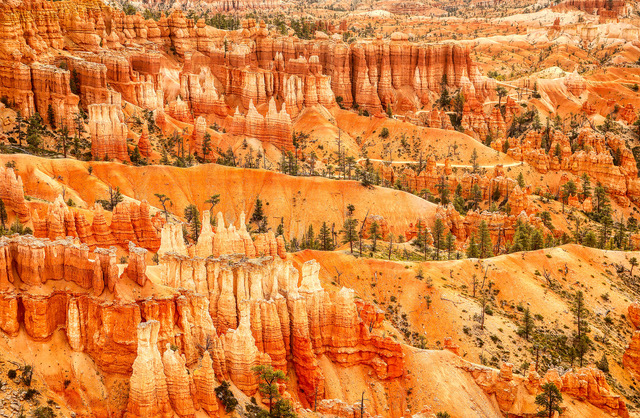 Hoodoos: Shown is another view of the hoodoos featured in Bryce Canyon National Park, which has the largest number of unique hoodoos of anywhere else in the world. There are other areas where the formations can be seen in Utah, but there are not as many hoodoos as those seen in Bryce Canyon. Photo by Gary Warren/ladailypost.com
 Red Canyon: We spent the late afternoon and night at Red Canyon, an area not far from the hoodoos of Bryce Canyon before visiting the national park. The area also features many geological formations but they are not as condensed as the hoodoos at Bryce. We found Red Canyon also offers many hiking and rock viewing opportunities but not as crowded as the national park. Also, notice the sunny skies, which faded into cloudy conditions by morning. Photo by Gary Warren/ladailypost.com
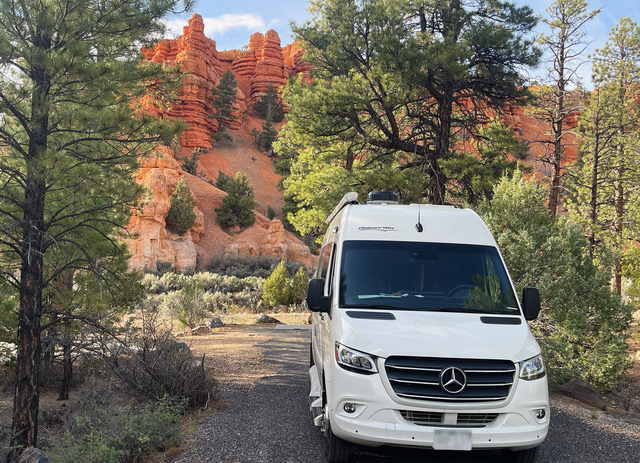 Campsite: Our campsite at Red Canyon was in a National Forest Service campground, which featured views in many directions but was shaded by the pine forest. Photo by Gary Warren/ladailypost.com